
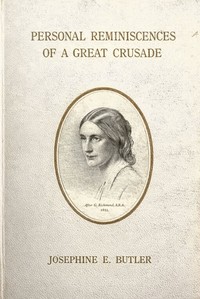
Personal reminiscences of a great crusade
by Josephine Elizabeth Grey Butler
- Language
- EN
- Format
- EPUB
- Size
- 409 KB
Description
"Personal reminiscences of a great crusade" by Josephine Elizabeth Grey Butler is a memoir written in the late 19th century. It charts Butler’s campaign against state regulation of prostitution and the Contagious Diseases Acts, presenting a blend of personal witness, political strategy, and moral argument. The focus is on building a broad movement—women, working men, clergy, and public figures—to defend civil liberty and women’s dignity from coercive medical-police systems.
The opening of the book sets the stakes of the struggle, offers a brief biographical sketch of Butler’s formation (family influences, marriage, charitable work, and grief that turned her to rescue work), and then explains how regulation began in France and was later introduced in Britain. It recounts early warnings and protests—from Harriet Martineau, Florence Nightingale, Nonconformist leaders, and rescue workers—leading to Butler’s decision to act and the Women’s Protest with its core arguments about liberty, justice, and public health. She describes taking the fight to the nation when elites were unresponsive, finding strong support among working men, enduring press silence, and receiving international encouragement from figures like Victor Hugo and Mazzini. The narrative highlights mass meetings, a hostile Glasgow student disruption, and border-county rallies, then turns to electoral battles, especially at Colchester against Sir Henry Storks, where mobs tried to silence reformers but the abolitionist side prevailed. Further scenes include a huge Manchester meeting, clerical hostility at the Nottingham Church Congress, and a government bill that the movement helped defeat. Chapter III reframes the cause as a defense of constitutional liberties as much as of women, and notes rapid organizational growth, allied reforms, and renewed election pressure on ministers, closing as activists shift a crowd to their own meeting at Pontefract. (This is an automatically generated summary.)
The opening of the book sets the stakes of the struggle, offers a brief biographical sketch of Butler’s formation (family influences, marriage, charitable work, and grief that turned her to rescue work), and then explains how regulation began in France and was later introduced in Britain. It recounts early warnings and protests—from Harriet Martineau, Florence Nightingale, Nonconformist leaders, and rescue workers—leading to Butler’s decision to act and the Women’s Protest with its core arguments about liberty, justice, and public health. She describes taking the fight to the nation when elites were unresponsive, finding strong support among working men, enduring press silence, and receiving international encouragement from figures like Victor Hugo and Mazzini. The narrative highlights mass meetings, a hostile Glasgow student disruption, and border-county rallies, then turns to electoral battles, especially at Colchester against Sir Henry Storks, where mobs tried to silence reformers but the abolitionist side prevailed. Further scenes include a huge Manchester meeting, clerical hostility at the Nottingham Church Congress, and a government bill that the movement helped defeat. Chapter III reframes the cause as a defense of constitutional liberties as much as of women, and notes rapid organizational growth, allied reforms, and renewed election pressure on ministers, closing as activists shift a crowd to their own meeting at Pontefract. (This is an automatically generated summary.)
FAQ
Is "Personal reminiscences of a great crusade" free to download?
Yes, it is free to download — no sign up needed.
What format is the file?
EPUB.
Reader reviews Be the first
No reviews yet. Be the first to review this book.
Write a review
Protected by reCAPTCHA.