
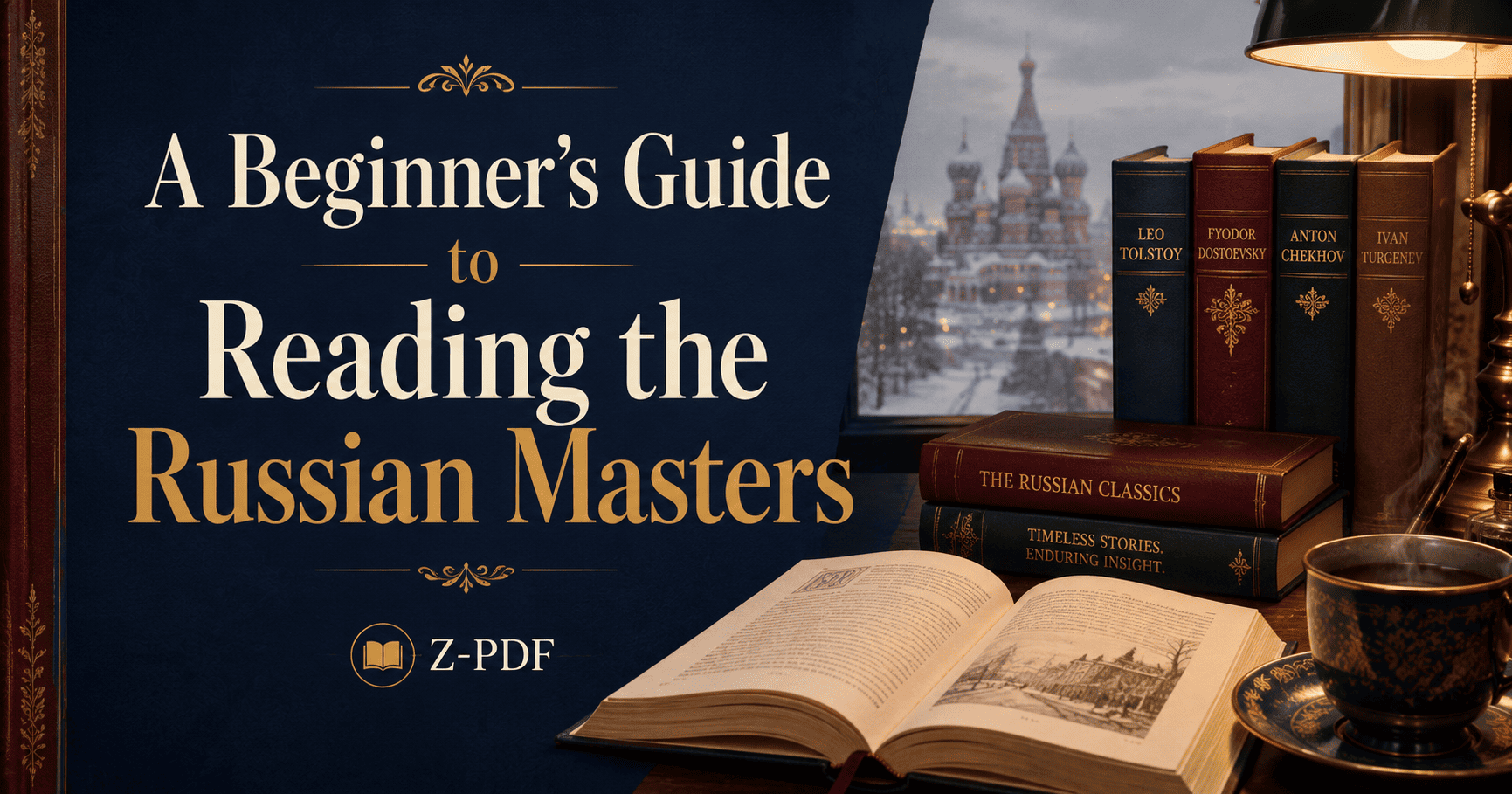
Few bodies of literature carry a bigger reputation, or a bigger sense of intimidation, than the Russian novel. Enormous casts, patronymic names that change from page to page, and questions about God and death lurking behind every dinner scene. Yet the Russian masters are also among the most emotionally generous writers who ever lived. Here is a practical map for beginning, without pretending you need a doctorate to enjoy them.
Start with Chekhov, not the doorstops
The instinct is to begin with the longest, most famous novel you can find. Resist it. Anton Chekhov's short stories are the gentlest, most welcoming door into this world. In twenty pages he can show you an entire life turning on a small disappointment. Read a handful of his stories first and you will absorb the emotional register of Russian literature before committing to a thousand pages.
Then try Turgenev
Ivan Turgenev is the most approachable of the great novelists. Fathers and Sons is short, elegant, and quietly heartbreaking, a story of generations misunderstanding one another that feels as current today as it did in the 1860s. If Chekhov gives you the mood, Turgenev shows you what a Russian novel of ideas can do at a manageable length.
Dostoevsky: heat and argument
When you are ready for the big questions, turn to Fyodor Dostoevsky. His novels are feverish, argumentative, and alive with characters who will not stop talking. Crime and Punishment is the natural entry point: a murder in the first act, followed by the far more frightening story of a mind trying to live with what it has done. Read it for suspense first and philosophy second, and it grips like a thriller.
Tolstoy: clarity and scale
Leo Tolstoy is the opposite temperament, calm, panoramic, almost godlike in his patience. War and Peace deserves its fame, but Anna Karenina is the better first Tolstoy: a single powerful story rather than a whole society, and one of the truest novels ever written about love, marriage, and self-deception. His prose is astonishingly clear, so the length is far less daunting than it looks.
How to keep the names straight
Russian characters are often named three or four ways: a first name, a patronymic, a surname, and an affectionate nickname. This trips up every new reader. Two tricks help enormously. First, keep a scrap of paper with the five or six main characters listed as you meet them. Second, do not panic when a nickname appears; read on and context will usually make it clear. After fifty pages the names stop being an obstacle and start feeling like family.
Read the introductions last
Scholarly introductions are wonderful, but they often reveal the ending. Save them for after you finish. Go in knowing only the premise, and let the story surprise you the way its first readers were surprised.
A suggested reading order
If you want a simple path, try this: a few Chekhov stories, then Fathers and Sons, then Crime and Punishment, then Anna Karenina. By the end of that sequence you will have moved from short to long, from mood to argument to grand scale, and you will know exactly which of these giants you want to spend more time with.
Where to find them free
Every writer mentioned here is in the public domain, and their major works are free to read and download on Z-PDF. Browse by author to build your Russian shelf, and start small; the reputation is heavy, but the reading itself is a pleasure.