
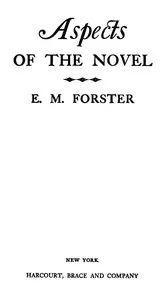
Aspects of the novel
by E. M. (Edward Morgan) Forster
- Language
- EN
- Format
- EPUB
- Size
- 322 KB
Description
This work is a collection of essays and speeches analysing the structure and elements of the novel form. E. M. Forster, a notable early 20th-century writer, assembles lectures delivered at Trinity College, Cambridge, in 1927, into a coherent commentary on narrative construction. The book examines key aspects such as plot, character development, and narrative rhythm, aiming to clarify the complexities inherent in novel writing and reading. Forster employs a conversational tone infused with humour and intellectual reflection, making abstract concepts accessible through informal discussion. The volume provides insights into the mechanics of storytelling, addressing what makes a successful novel and how the various components interact to create a unified work. It functions both as a critique and a guide, reflecting Forster’s interest in the craft of fiction during a period of evolving literary traditions.
The book offers an analytical perspective rooted in early 20th-century literary theory, contributing to discussions on narrative techniques and the qualities that define effective storytelling. It is based on lectures, blending informal speech with critical insights, and reflects Forster's views on the art of the novel during his time.
The book offers an analytical perspective rooted in early 20th-century literary theory, contributing to discussions on narrative techniques and the qualities that define effective storytelling. It is based on lectures, blending informal speech with critical insights, and reflects Forster's views on the art of the novel during his time.
From the opening pages
THESE are some lectures (the Clark lectures) which were delivered under the auspices of Trinity College, Cambridge, in the spring of 1927. They were informal, indeed talkative, in their tone, and it seemed safer when presenting them in book form not to mitigate the talk, in case nothing should be left at all. Words such as "I," "you," "one," "we," "curiously enough," "so to speak," "only imagine," and "of course" will consequently occur on every page and will rightly distress the sensitive reader; but he is asked to remember that if these words were removed others, perhaps more distinguished, might escape through the orifices they left, and that since the novel is itself often colloquial it may possibly withhold some of its secrets from the graver and grander streams of criticism, and may reveal them to backwaters and shallows. CONTENTS I INTRODUCTORY II THE STORY III PEOPLE IV PEOPLE ( continued ) V THE PLOT VI FANTASY VII PROPHECY VIII PATTERN AND RHYTHM IX CONCLUSION INDEX OF MAIN REFERENCES ASPECTS OF THE NOVEL I INTRODUCTORY THIS lectureship is connected with the name of William George Clark, a fellow of Trinity. It is through him we meet today, and through him we shall approach our subject. Clark was, I believe, a Yorkshireman. He was born in 1821, was at school at Sedbergh and Shrewsbury, entered Trinity as an undergraduate in 1840, became fellow four years later, and made the college his home for nearly thirty years, only leaving it when his health broke, shortly before his death. He is best known as a Shakespearian scholar, but he published two books on other subjects to which we must here refer. He went as a young man to Spain and wrote a pleasant lively account of his holiday called Gazpacho : Gazpacho being the name of a certain cold soup which he ate and appears to have enjoyed among the peasants of Andalusia: indeed he appears to have enjoyed everything. Eight years later, as a result of a holiday in Greece, he published a second book, Peloponnesus . Peloponnesus is a graver work and a duller. Greece was a serious place in those days, more serious than Spain, besides, Clark had by now not only taken Orders but become Public Orator, and he was, above all, travelling with Dr. Thompson, the then Master of the college, who was not at all the sort…
Ask about this book
An AI guide answers your questions about this title
FAQ
Is "Aspects of the novel" free to download?
Yes, it is free to download — no sign up needed.
What format is the file?
EPUB.
More by E. M. (Edward Morgan) Forster


Similar books

Reader reviews Be the first
No reviews yet. Be the first to review this book.
Write a review
Protected by reCAPTCHA.