
Your download link has expired — please click the download button again.

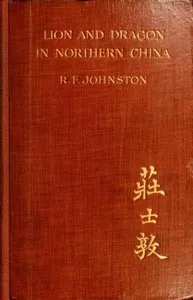
From Peking to Mandalay: A Journey from North China to Burma through Tibetan Ssuch'uan and Yunnan
by Reginald Fleming, Sir Johnston
- Language
- EN
- Format
- EPUB
- Size
- 4.8 MB
Description
This work is a travel narrative, composed as a detailed account of a journey through northern China and into Burma during the early 20th century. It records the author's traversing of regions including Tibetan Ssuch'uan and Yunnan, with a focus on the diverse landscapes, local tribes, and cultural features encountered along the route. The narrative emphasizes the author's personal motivations for the expedition, which are rooted in a desire for knowledge and cultural understanding rather than scientific or governmental objectives. The work provides observations on the natural environment, human settlements, and traditional practices in these areas, offering insight into regions that were relatively less known at the time.
The account combines geographical descriptions with cultural and ethnographic observations, providing a panoramic view of the landscapes and peoples encountered. It also documents the logistical challenges and the physical environment faced during the journey. As a piece of early 20th-century travel writing, it reflects the period's interest in exploration, regional diversity, and the interactions between natural and human history in remote parts of Asia.
The account combines geographical descriptions with cultural and ethnographic observations, providing a panoramic view of the landscapes and peoples encountered. It also documents the logistical challenges and the physical environment faced during the journey. As a piece of early 20th-century travel writing, it reflects the period's interest in exploration, regional diversity, and the interactions between natural and human history in remote parts of Asia.
From the opening pages
secrets of the fascination of the gorges is the ever-present contrast between the dumb forces of nature and evanescent humanity. For ages past human muscle has matched itself in a brave struggle with those titanic forces. The very rocks themselves, the standing symbol of changelessness, reveal something of the history of this unending strife. The smooth grooves worn deep into the jagged summits of innumerable crags have been scooped out by the ropes hauled by a hundred generations of dead trackers, and just above the water-line the deep holes in the hard lime-stone made by the poles of millions of toiling junkmen in past centuries are still used as hooks and points of leverage by their descendants of to-day. When it is remembered that more than a hundred trackers are sometimes required to haul a single junk against the current of the greater rapids, and that a junk may take half a day in covering a distance of 200 yards, some idea will be formed of the permanent difficulties that confront, and always have confronted, the indomitable Chinese navigator on these inland waters. Much has been written by former travellers on the subject of the terribly hard lives led by the Yangtse trackers, but I am not sure that the degradation of the tracker and the wretchedness of his life have not been greatly over-stated. Hard as the work is, the trackers' mode of life can be by no means unhealthy, and their daily food is, from the Chinese point of view, both plentiful and good. Better than all, their work is in its way interesting, and of such a nature that it can never become really monotonous. That they take a genuine satisfaction in its accomplishment, quite apart from the reward they are to receive, seemed to me, as I watched them at their labours, an obvious fact. I fancy that Ruskin would have supported the view that the tracker's lot is by no means so pitiable as that of myriads of factory hands in the hideous industrial centres of modern Europe. Personally, if I had to choose between hauling junks over rapids in the magnificent gorges of the Yangtse, and pulling cranks and levers in a dismal Lancashire factory, I should not for a moment hesitate in my choice: and I should not choose the cranks and levers. My journey from Ichang to Wan-hsien occupied eleven days. We…
Ask about this book
An AI guide answers your questions about this title
FAQ
Is "From Peking to Mandalay: A Journey from North China to Burma through Tibetan Ssuch'uan and Yunnan" free to download?
Yes, it is free to download — no sign up needed.
What format is the file?
EPUB.
More by Reginald Fleming, Sir Johnston
Similar books




Reader reviews Be the first
No reviews yet. Be the first to review this book.
Write a review
Protected by reCAPTCHA.