
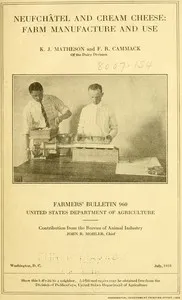
Neufchâtel and cream cheese: farm manufacture and use
by K. J. (Kenneth Jesse) Matheson
- Language
- EN
- Format
- EPUB
- Size
- 2 MB
Description
Neufchâtel and cream cheese by K. J. Matheson and F. R. Cammack is a government agricultural bulletin from the early 20th century. It is a practical, step-by-step guide that explains how to make soft, fresh cheeses—especially Neufchâtel, cream cheese, and pimiento-cream cheese—on farms or in small dairies, with notes on equipment, packaging, costs, marketing, and their use in cooking.
The bulletin begins with the qualities of these soft cheeses and explains why they suit small-scale production. It then details the full manufacturing process: choosing clean, fresh milk; using starters to control acidity; standardizing fat (about 6% for cream cheese); optional pasteurization (145°F for 30 minutes); and the make procedure—setting at about 80–83°F with rennet or pepsin, 15–18 hours of coagulation, draining in cloths, optional cooling, pressing under weights, then working and salting. It covers popular flavorings (pimiento, olives, Roquefort), molding methods using a food-chopper attachment, wrapping in foil or packing in jars, typical yields (roughly 14–16 lb Neufchâtel per 100 lb 4% milk; 17–19 lb cream cheese per 100 lb 6% milk), and standard package sizes. Practical chapters estimate costs per package, outline simple equipment and its depreciation, give advice on direct-to-consumer marketing and keeping quality, and finish with a concise, repeatable workflow plus extensive recipes showing how to use these cheeses in salads, sandwiches, vegetables, cereals, egg dishes, and other household meals.
The bulletin begins with the qualities of these soft cheeses and explains why they suit small-scale production. It then details the full manufacturing process: choosing clean, fresh milk; using starters to control acidity; standardizing fat (about 6% for cream cheese); optional pasteurization (145°F for 30 minutes); and the make procedure—setting at about 80–83°F with rennet or pepsin, 15–18 hours of coagulation, draining in cloths, optional cooling, pressing under weights, then working and salting. It covers popular flavorings (pimiento, olives, Roquefort), molding methods using a food-chopper attachment, wrapping in foil or packing in jars, typical yields (roughly 14–16 lb Neufchâtel per 100 lb 4% milk; 17–19 lb cream cheese per 100 lb 6% milk), and standard package sizes. Practical chapters estimate costs per package, outline simple equipment and its depreciation, give advice on direct-to-consumer marketing and keeping quality, and finish with a concise, repeatable workflow plus extensive recipes showing how to use these cheeses in salads, sandwiches, vegetables, cereals, egg dishes, and other household meals.
Ask about this book
An AI guide answers your questions about this title
FAQ
Is "Neufchâtel and cream cheese: farm manufacture and use" free to download?
Yes, it is free to download — no sign up needed.
What format is the file?
EPUB.
Reader reviews Be the first
No reviews yet. Be the first to review this book.
Write a review
Protected by reCAPTCHA.