
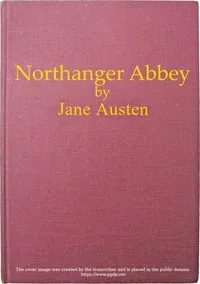
Northanger Abbey
by Jane Austen
- Language
- EN
- Format
- EPUB
- Size
- 448 KB
Description
Austen's "Northanger Abbey" centres on Catherine Morland, a seventeen-year-old whose vivid imagination and love of Gothic novels influence her perceptions of social interactions and surroundings. The novel, a satirical commentary on Gothic fiction and eighteenth-century social mores, follows Catherine’s experiences during her visit to Bath and subsequent stay at Northanger Abbey. Her misconceptions and romantic fantasies lead to misunderstandings and comedic situations, highlighting her naivety and youthful idealism. The narrative examines themes of innocence, social class, and the distinction between fiction and reality, set within the context of early nineteenth-century British society. The story also explores the development of Catherine’s character as she learns to navigate complex social norms and personal perceptions through her encounters with a range of characters.
Published posthumously in 1817, the work was completed in 1799 and reflects Austen's satirical perspective on popular gothic and romantic fiction. It is considered a coming-of-age novel that employs humour and social critique, characteristic of Austen’s broader body of work. The novel offers insights into early 19th-century British manners and literature, with particular attention to the influence of fiction on young women’s perceptions.
Published posthumously in 1817, the work was completed in 1799 and reflects Austen's satirical perspective on popular gothic and romantic fiction. It is considered a coming-of-age novel that employs humour and social critique, characteristic of Austen’s broader body of work. The novel offers insights into early 19th-century British manners and literature, with particular attention to the influence of fiction on young women’s perceptions.
From the opening pages
This little work was finished in the year 1803, and intended for immediate publication. It was disposed of to a bookseller, it was even advertised, and why the business proceeded no farther, the author has never been able to learn. That any bookseller should think it worth-while to purchase what he did not think it worth-while to publish seems extraordinary. But with this, neither the author nor the public have any other concern than as some observation is necessary upon those parts of the work which thirteen years have made comparatively obsolete. The public are entreated to bear in mind that thirteen years have passed since it was finished, many more since it was begun, and that during that period, places, manners, books, and opinions have undergone considerable changes. No one who had ever seen Catherine Morland in her infancy would have supposed her born to be an heroine. Her situation in life, the character of her father and mother, her own person and disposition, were all equally against her. Her father was a clergyman, without being neglected, or poor, and a very respectable man, though his name was Richard—and he had never been handsome. He had a considerable independence besides two good livings—and he was not in the least addicted to locking up his daughters. Her mother was a woman of useful plain sense, with a good temper, and, what is more remarkable, with a good constitution. She had three sons before Catherine was born; and instead of dying in bringing the latter into the world, as anybody might expect, she still lived on—lived to have six children more—to see them growing up around her, and to enjoy excellent health herself. A family of ten children will be always called a fine family, where there are heads and arms and legs enough for the number; but the Morlands had little other right to the word, for they were in general very plain, and Catherine, for many years of her life, as plain as any. She had a thin awkward figure, a sallow skin without colour, dark lank hair, and strong features—so much for her person; and not less unpropitious for heroism seemed her mind. She was fond of all boys’ plays, and greatly preferred cricket not merely to dolls, but to the more heroic enjoyments of infancy, nursing a dormouse, feeding a canary-bird, or watering a rose-bush. Indeed she…
Ask about this book
An AI guide answers your questions about this title
FAQ
Is "Northanger Abbey" free to download?
Yes, it is free to download — no sign up needed.
What format is the file?
EPUB.
More by Jane Austen

![Love and Freindship [sic] — Jane Austen cover](https://z-pdf.com/img-cache/400/covers/gutenberg/2026/07/pg1212.jpg.webp)

Similar books



Reader reviews Be the first
No reviews yet. Be the first to review this book.
Write a review
Protected by reCAPTCHA.