
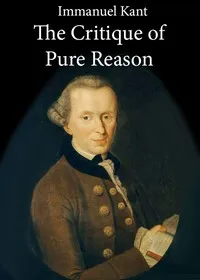
The Critique of Pure Reason
- Language
- EN
- Format
- EPUB
- Size
- 614 KB
Description
Written in 1781, this philosophical treatise originates from a period of Enlightenment inquiry into human cognition. Immanuel Kant examines the nature and limits of human understanding, focusing on how knowledge is possible prior to experience. The work challenges traditional rationalist and empiricist approaches by proposing that space and time are forms of intuition that structure our experience, and that certain judgments about knowledge are inherently synthetic and a priori. Kant investigates how these judgments underpin scientific and metaphysical knowledge, asserting their importance for the coherence of reason itself.
The text is organised into sections that analyse the faculties of human cognition and establish the possibility of metaphysics as a science. It critically evaluates the scope of human reason and introduces concepts that have significantly influenced subsequent philosophy. Its context lies within late 18th-century debates on epistemology, metaphysics, and the nature of scientific knowledge.
The text is organised into sections that analyse the faculties of human cognition and establish the possibility of metaphysics as a science. It critically evaluates the scope of human reason and introduces concepts that have significantly influenced subsequent philosophy. Its context lies within late 18th-century debates on epistemology, metaphysics, and the nature of scientific knowledge.
From the opening pages
II. The Human Intellect, even in an Unphilosophical State, is in Possession of Certain Cognitions “ priori”. III. Philosophy stands in need of a Science which shall Determine the Possibility, Principles, and Extent of Human Knowledge “ priori” IV. Of the Difference Between Analytical and Synthetical Judgements. V. In all Theoretical Sciences of Reason, Synthetical Judgements “ priori” are contained as Principles. VI. The Universal Problem of Pure Reason. VII. Idea and Division of a Particular Science, under the Name of a Critique of Pure Reason. I. Transcendental Doctrine of Elements First Part—TRANSCENDENTAL ÆSTHETIC 1. Introductory SECTION I. OF SPACE 2. Metaphysical Exposition of this Conception. 3. Transcendental Exposition of the Conception of Space. 4. Conclusions from the foregoing Conceptions. SECTION II. OF TIME 5. Metaphysical Exposition of this Conception. 6. Transcendental Exposition of the Conception of Time. 7. Conclusions from the above Conceptions. 8. Elucidation. 9. General Remarks on Transcendental Æsthetic. 10. Conclusion of the Transcendental Æsthetic. Second Part—TRANSCENDENTAL LOGIC Introduction. Idea of a Transcendental Logic I. Of Logic in General II. Of Transcendental Logic III. Of the Division of General Logic into Analytic and Dialectic IV. Of the Division of Transcendental Logic into Transcendental Analytic and Dialectic FIRST DIVISION—TRANSCENDENTAL ANALYTIC Chapter I. Of the Transcendental Clue to the Discovery of all Pure Conceptions of the Understanding Introductory 3 Section I. Of the Logical Use of the Understanding in General. 4 Section II. Of the Logical Function of the Understanding in Judgements. 5 Section III. Of the Pure Conceptions of the Understanding, or Categories. 6 Chapter II. Of the Deduction of the Pure Conception of the Understanding Section I. Of the Principles of a Transcendental Deduction in general 9 Transition to the Transcendental Deduction of the Categories. 10 Section II Transcendental Deduction of the pure Conceptions of the Understanding. Of the Possibility of a Conjunction of the manifold representations given by Sense. 11. Of the Originally Synthetical Unity of Apperception. 12 The Principle of the Synthetical Unity of Apperception is the highest Principle of all exercise of the Understanding. 13 What Objective Unity of Self-consciousness is. 14 The Logical Form of all Judgements consists in the Objective Unity of Apperception of the Conceptions contained therein. 15 All Sensuous Intuitions are subject to the Categories, as Conditions under which…
Ask about this book
An AI guide answers your questions about this title
FAQ
Is "The Critique of Pure Reason" free to download?
Yes, it is free to download — no sign up needed.
What format is the file?
EPUB.
More by Immanuel Kant




Similar books


Reader reviews Be the first
No reviews yet. Be the first to review this book.
Write a review
Protected by reCAPTCHA.