
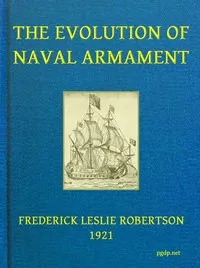
The Evolution of Naval Armament
- Language
- EN
- Format
- EPUB
- Size
- 2.2 MB
Description
The book examines the development of naval armament from the 19th to early 20th centuries, focusing particularly on technological innovations in ships, guns, and propulsion systems. Written by Frederick Leslie Robertson, an engineer commander in the Royal Navy, it presents a technical history aimed at clarifying the evolution of modern naval forces. The narrative discusses the limitations of earlier warship designs and the advancements that led to the larger, more powerful vessels exemplified by the Admiral class battleships introduced around 1880. The work emphasizes the interconnectedness of naval architecture, weaponry, and engineering, providing detailed descriptions of material progress and their impact on naval strategy and capabilities during this period. As a historical account, it seeks to bridge the gap between traditional history writings and technical texts, offering insights into the practical and material factors driving naval innovation in the late 19th and early 20th centuries.
From the opening pages
the public in convenient form. In the attempt to supply such a description I have taken the liberty, as an engineer, of treating of naval material as a whole; tracing, as well as my technical knowledge permits, the progress of all the three principal elements—ship, gun, engine—and their interdependence. The result, faulty and incomplete as it is, may nevertheless be of considerable service, it is hoped, in clarifying the work of the historians and bridging the gap which divides the classic histories from our modern text-books. I have considered our modern navy to begin with the “Admiral” class of battleship, about the year 1880. My respectful thanks are due to the heads of three Admiralty departments: Captain R. H. Crooke, C.B., lately Director of Naval Ordnance; Engineer Vice-Admiral Sir George Goodwin, K.C.B., LL.D., Engineer-in-Chief of the Fleet; and Sir Eustace T. D’Eyncourt, K.C.B., Director of Naval Construction; for their unofficial approval. I wish to acknowledge my indebtedness to the officials of the Admiralty and the R.U.S.I. libraries, for their invariable kindness; to the Directors of the British and S. Kensington Museums, for permission to reproduce pictures in their possession; to Mr. A. W. Johns, C.B.E., Assistant Director of Naval Construction, Engineer Commander E. C. Smith, O.B.E., R.N., Mr. H. W. Dickinson, of the S. Kensington Museum, Mr. Edward Fraser, and Sir George Hadcock, F.R.S., R.A., of Elswick, for various help and criticism; and especially to Mr. L. G. Carr Laughton, of the Admiralty library, of whose advice and knowledge I have often availed myself, and to whose encouragement the completion of the work has been largely due. It only remains to state that the whole of the book is written and published on my own responsibility, and that it is in no manner or degree an official publication. F. L. R. CONTENTS PAGE I. The Sailing Ship 1 II. The Smooth-bore Gun 61 III. The Steam Engine 93 IV. “ New Principles of Gunnery ” 112 V. The Carronade 125 VI. The Truck Carriage 140 VII. The Shell Gun 160 VIII. The Rifled Gun 181 IX. Propelling Machinery 210 X. The Ironclad 246 Index 303 PLATES A Sixty-gun Ship of late Seventeenth Century Frontispiece To face page A Tudor Ship of Period 1540–50 60 Tudor Ships under Sail 124 The Speaker , a Second-rate of the Commonwealth 180 The Comet of 1812 224 Rattler versus Alecto 240 The Warrior 260…
Ask about this book
An AI guide answers your questions about this title
FAQ
Is "The Evolution of Naval Armament" free to download?
Yes, it is free to download — no sign up needed.
What format is the file?
EPUB.
Similar books



Reader reviews Be the first
No reviews yet. Be the first to review this book.
Write a review
Protected by reCAPTCHA.