
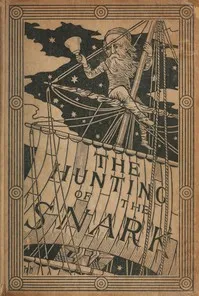
The Hunting of the Snark: An Agony in Eight Fits
- Language
- EN
- Format
- EPUB
- Size
- 272 KB
Description
This poem narrates the quest of ten peculiar characters who set out to hunt a mysterious creature called the Snark, using only a blank map for guidance. The expedition, characterised by its absurdity, involves encounters with fantastical creatures and the threat of a deadly Boojum. As the journey unfolds, the crew's experiences grow increasingly bizarre, culminating in the discovery of the Snark by one of their number. However, this individual vanishes without trace, confirming fears that the Snark may be a fatal entity. The narrative exemplifies nonsense poetry, employing playful language and imaginative episodes within a structured rhythmic form.
Written by Lewis Carroll between 1874 and 1876, the poem belongs to British literature and reflects the Victorian period's penchant for whimsy and wordplay. It combines elements of humour and fantasy, framing a seemingly pointless adventure that also explores themes of pursuit, certainty, and the unknown. Although primarily a work of nonsense, it reveals Carroll's skill in blending playful verse with clever structural design.
Written by Lewis Carroll between 1874 and 1876, the poem belongs to British literature and reflects the Victorian period's penchant for whimsy and wordplay. It combines elements of humour and fantasy, framing a seemingly pointless adventure that also explores themes of pursuit, certainty, and the unknown. Although primarily a work of nonsense, it reveals Carroll's skill in blending playful verse with clever structural design.
From the opening pages
If—and the thing is wildly possible—the charge of writing nonsense were ever brought against the author of this brief but instructive poem, it would be based, I feel convinced, on the line (in p.4) “Then the bowsprit got mixed with the rudder sometimes.” In view of this painful possibility, I will not (as I might) appeal indignantly to my other writings as a proof that I am incapable of such a deed: I will not (as I might) point to the strong moral purpose of this poem itself, to the arithmetical principles so cautiously inculcated in it, or to its noble teachings in Natural History—I will take the more prosaic course of simply explaining how it happened. The Bellman, who was almost morbidly sensitive about appearances, used to have the bowsprit unshipped once or twice a week to be revarnished, and it more than once happened, when the time came for replacing it, that no one on board could remember which end of the ship it belonged to. They knew it was not of the slightest use to appeal to the Bellman about it—he would only refer to his Naval Code, and read out in pathetic tones Admiralty Instructions which none of them had ever been able to understand—so it generally ended in its being fastened on, anyhow, across the rudder. The helmsman used to stand by with tears in his eyes; he knew it was all wrong, but alas! Rule 42 of the Code, “No one shall speak to the Man at the Helm,” had been completed by the Bellman himself with the words “and the Man at the Helm shall speak to no one.” So remonstrance was impossible, and no steering could be done till the next varnishing day. During these bewildering intervals the ship usually sailed backwards. As this poem is to some extent connected with the lay of the Jabberwock, let me take this opportunity of answering a question that has often been asked me, how to pronounce “slithy toves.” The “i” in “slithy” is long, as in “writhe”; and “toves” is pronounced so as to rhyme with “groves.” Again, the first “o” in “borogoves” is pronounced like the “o” in “borrow.” I have heard people try to give it the sound of the “o” in “worry”. Such is Human Perversity. This also seems a fitting occasion to notice the other hard words in that poem.
Ask about this book
An AI guide answers your questions about this title
FAQ
Is "The Hunting of the Snark: An Agony in Eight Fits" free to download?
Yes, it is free to download — no sign up needed.
What format is the file?
EPUB.
More by Lewis Carroll

Similar books


Reader reviews Be the first
No reviews yet. Be the first to review this book.
Write a review
Protected by reCAPTCHA.