
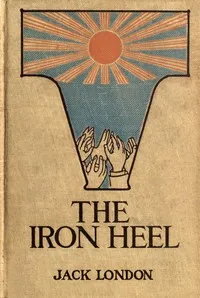
The iron heel
by Jack London
- Language
- EN
- Format
- EPUB
- Size
- 445 KB
Description
This work is a dystopian novel constructed as a manuscript discovered centuries after the events it describes. It presents a future America dominated by an oppressive oligarchic regime called the "Iron Heel," rising in opposition to a burgeoning socialist movement. The narrative centres on Avis Everhard, who recounts the struggles of her husband Ernest against the authoritarian rulers. The story comments on social and political conflicts of its time, reflecting anxieties about class conflict and the potential for tyranny. Written and published in 1908, the novel exemplifies early 20th-century American literature and foreshadows themes found in later dystopian fiction.
The novel is notable for its prophetic tone and influence on political thought, with themes that have resonated through subsequent works by authors like George Orwell. Its narrative technique, combining personal perspective with political commentary, situates it within the tradition of political dystopias and speculative fiction from the early 20th century.
The novel is notable for its prophetic tone and influence on political thought, with themes that have resonated through subsequent works by authors like George Orwell. Its narrative technique, combining personal perspective with political commentary, situates it within the tradition of political dystopias and speculative fiction from the early 20th century.
From the opening pages
It cannot be said that the Everhard Manuscript is an important historical document. To the historian it bristles with errors—not errors of fact, but errors of interpretation. Looking back across the seven centuries that have lapsed since Avis Everhard completed her manuscript, events, and the bearings of events, that were confused and veiled to her, are clear to us. She lacked perspective. She was too close to the events she writes about. Nay, she was merged in the events she has described. Nevertheless, as a personal document, the Everhard Manuscript is of inestimable value. But here again enter error of perspective, and vitiation due to the bias of love. Yet we smile, indeed, and forgive Avis Everhard for the heroic lines upon which she modelled her husband. We know to-day that he was not so colossal, and that he loomed among the events of his times less largely than the Manuscript would lead us to believe. We know that Ernest Everhard was an exceptionally strong man, but not so exceptional as his wife thought him to be. He was, after all, but one of a large number of heroes who, throughout the world, devoted their lives to the Revolution; though it must be conceded that he did unusual work, especially in his elaboration and interpretation of working-class philosophy. “Proletarian science” and “proletarian philosophy” were his phrases for it, and therein he shows the provincialism of his mind—a defect, however, that was due to the times and that none in that day could escape. But to return to the Manuscript. Especially valuable is it in communicating to us the feel of those terrible times. Nowhere do we find more vividly portrayed the psychology of the persons that lived in that turbulent period embraced between the years 1912 and 1932—their mistakes and ignorance, their doubts and fears and misapprehensions, their ethical delusions, their violent passions, their inconceivable sordidness and selfishness. These are the things that are so hard for us of this enlightened age to understand. History tells us that these things were, and biology and psychology tell us why they were; but history and biology and psychology do not make these things alive. We accept them as facts, but we are left without sympathetic comprehension of them. This sympathy comes to us, however, as we peruse the Everhard Manuscript. We enter into the minds of the actors in that long-ago world-drama,…
Ask about this book
An AI guide answers your questions about this title
FAQ
Is "The iron heel" free to download?
Yes, it is free to download — no sign up needed.
What format is the file?
EPUB.
More by Jack London





Similar books



Reader reviews Be the first
No reviews yet. Be the first to review this book.
Write a review
Protected by reCAPTCHA.