
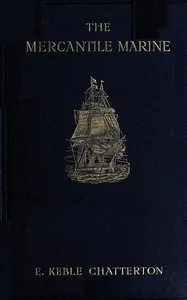
The Mercantile Marine
by E. Keble (Edward Keble) Chatterton
- Language
- EN
- Format
- EPUB
- Size
- 3 MB
Description
The Mercantile Marine by E. Keble Chatterton is a historical account written in the early 20th century. It surveys the rise and evolution of merchant shipping from antiquity to the modern liner, emphasizing commerce, ship design, maritime law, and the lives of seafarers over naval warfare. The focus is on how trade routes, technology, and institutions built the Merchant Service and spread civilization.
The opening of the book sets its aim and scope, noting how the U-boat crisis awakened public appreciation of the Merchant Service, then moving past wartime exploits to trace the merchant marine’s long development. It sketches the ancient Mediterranean trade from Egyptians, Phoenicians, Greeks, and Romans through persistent piracy, then details medieval Venice, Genoa, and Pisa: crusades and pilgrimages fueling demand; convoys and galleys protecting slow, capacious cargo ships; communal ship governance, profit-sharing crews, strict statutes on loading and ballast, and the rough, self-provisioned life of passengers. Turning north, it shows how the herring fishery created wealth, ships, and seamanship, the Hanseatic League’s dominance and rules, and the constant threat of Channel, North Sea, and Baltic piracy—culminating in the exploits and suppression of bands like the Victual Brothers. The narrative then follows the late medieval shift to larger, three-masted vessels, the compass and Portuguese-Spanish oceanic breakthroughs (Prince Henry, da Gama, Columbus), and England’s response—schools, shipyards, and merchant-adventurers such as Hawkins and Drake. It closes this opening section with sixteenth-century practice as reflected in Hakluyt: disciplined yet still communal command, precise victualling and record-keeping, and the 1553 three-ship venture toward Muscovy under Willoughby and Chancellor, illustrating real ship capabilities, tools, and exploratory method. (This is an automatically generated summary.)
The opening of the book sets its aim and scope, noting how the U-boat crisis awakened public appreciation of the Merchant Service, then moving past wartime exploits to trace the merchant marine’s long development. It sketches the ancient Mediterranean trade from Egyptians, Phoenicians, Greeks, and Romans through persistent piracy, then details medieval Venice, Genoa, and Pisa: crusades and pilgrimages fueling demand; convoys and galleys protecting slow, capacious cargo ships; communal ship governance, profit-sharing crews, strict statutes on loading and ballast, and the rough, self-provisioned life of passengers. Turning north, it shows how the herring fishery created wealth, ships, and seamanship, the Hanseatic League’s dominance and rules, and the constant threat of Channel, North Sea, and Baltic piracy—culminating in the exploits and suppression of bands like the Victual Brothers. The narrative then follows the late medieval shift to larger, three-masted vessels, the compass and Portuguese-Spanish oceanic breakthroughs (Prince Henry, da Gama, Columbus), and England’s response—schools, shipyards, and merchant-adventurers such as Hawkins and Drake. It closes this opening section with sixteenth-century practice as reflected in Hakluyt: disciplined yet still communal command, precise victualling and record-keeping, and the 1553 three-ship venture toward Muscovy under Willoughby and Chancellor, illustrating real ship capabilities, tools, and exploratory method. (This is an automatically generated summary.)
FAQ
Is "The Mercantile Marine" free to download?
Yes, it is free to download — no sign up needed.
What format is the file?
EPUB.
More by E. Keble (Edward Keble) Chatterton

Reader reviews Be the first
No reviews yet. Be the first to review this book.
Write a review
Protected by reCAPTCHA.