
Your download link has expired — please click the download button again.
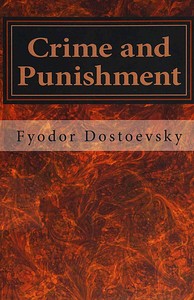
Crime and Punishment
- Language
- EN
- Format
- EPUB
- Size
- 765 KB
Description
The novel centres on Rodion Raskolnikov, a former law student living in poverty in Saint Petersburg, who develops a theory that certain individuals are justified in committing crimes if their actions serve a higher purpose. He devises a plan to murder an unscrupulous pawnbroker and her sister, believing that his act will be justified due to his supposed extraordinary status. Following the murder, Raskolnikov experiences intense psychological turmoil, marked by confusion, paranoia, and overwhelming guilt, as his rationalisations are challenged by his emotional and moral responses. The work examines themes of morality, guilt, and redemption within the context of 19th-century Russian society, reflecting the philosophical debates of that period.
Published in 1866, "Crime and Punishment" is a novel that combines elements of psychological fiction and social critique. It explores the consequences of crime on the individual's conscience and societal perception, set against the backdrop of Saint Petersburg's urban environment. The novel is considered a key work of Russian literature and exemplifies Dostoevsky's interest in moral philosophy and human psychology.
Published in 1866, "Crime and Punishment" is a novel that combines elements of psychological fiction and social critique. It explores the consequences of crime on the individual's conscience and societal perception, set against the backdrop of Saint Petersburg's urban environment. The novel is considered a key work of Russian literature and exemplifies Dostoevsky's interest in moral philosophy and human psychology.
From the opening pages
TRANSLATOR’S PREFACE A few words about Dostoevsky himself may help the English reader to understand his work. Dostoevsky was the son of a doctor. His parents were very hard-working and deeply religious people, but so poor that they lived with their five children in only two rooms. The father and mother spent their evenings in reading aloud to their children, generally from books of a serious character. Though always sickly and delicate Dostoevsky came out third in the final examination of the Petersburg school of Engineering. There he had already begun his first work, “Poor Folk.” This story was published by the poet Nekrassov in his review and was received with acclamations. The shy, unknown youth found himself instantly something of a celebrity. A brilliant and successful career seemed to open before him, but those hopes were soon dashed. In 1849 he was arrested. Though neither by temperament nor conviction a revolutionist, Dostoevsky was one of a little group of young men who met together to read Fourier and Proudhon. He was accused of “taking part in conversations against the censorship, of reading a letter from Byelinsky to Gogol, and of knowing of the intention to set up a printing press.” Under Nicholas I. (that “stern and just man,” as Maurice Baring calls him) this was enough, and he was condemned to death. After eight months’ imprisonment he was with twenty-one others taken out to the Semyonovsky Square to be shot. Writing to his brother Mihail, Dostoevsky says: “They snapped words over our heads, and they made us put on the white shirts worn by persons condemned to death. Thereupon we were bound in threes to stakes, to suffer execution. Being the third in the row, I concluded I had only a few minutes of life before me. I thought of you and your dear ones and I contrived to kiss Plestcheiev and Dourov, who were next to me, and to bid them farewell. Suddenly the troops beat a tattoo, we were unbound, brought back upon the scaffold, and informed that his Majesty had spared us our lives.” The sentence was commuted to hard labour. One of the prisoners, Grigoryev, went mad as soon as he was untied, and never regained his sanity. The intense suffering of this experience left a lasting stamp on Dostoevsky’s mind. Though his religious temper led him in the end to accept every suffering with…
FAQ
Is "Crime and Punishment" free to download?
Yes, it is free to download — no sign up needed.
What format is the file?
EPUB.
More by Fyodor Dostoyevsky
Similar books

Reader reviews Be the first
No reviews yet. Be the first to review this book.
Write a review
Protected by reCAPTCHA.