
Your download link has expired — please click the download button again.
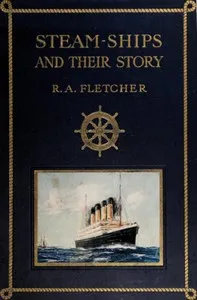
Steam-ships : $b The story of their development to the present day
- Language
- EN
- Format
- EPUB
- Size
- 27 MB
Description
Written in the early 20th century, this work traces the development of steam-ships from their inception in the early 19th century to the early 20th century. The author, R. A. Fletcher, provides a detailed historical account of technological innovations and engineering advances that transformed maritime transportation. The book begins with an overview of early attempts at mechanical propulsion, documenting the gradual shift from traditional sailing vessels to steam-powered ships. It highlights significant milestones, such as the construction of the first P. & O. steam-ship "William Fawcett" in 1829, and discusses the broader implications of steam navigation on trade, naval warfare, and global connectivity during the period.
Throughout the volume, Fletcher integrates numerous illustrations to support his descriptions of ship designs and technological features. The narrative emphasises the importance of engineering progress in enhancing the efficiency, reliability, and size of steam-ships, reflecting their crucial role in maritime history. The work situates the evolution of steam navigation within the context of technological and industrial advances of the 19th and early 20th centuries.
Throughout the volume, Fletcher integrates numerous illustrations to support his descriptions of ship designs and technological features. The narrative emphasises the importance of engineering progress in enhancing the efficiency, reliability, and size of steam-ships, reflecting their crucial role in maritime history. The work situates the evolution of steam navigation within the context of technological and industrial advances of the 19th and early 20th centuries.
From the opening pages
The “William Fawcett,” the First P. & O. Steam-ship, 209 Tons, Built 1829. On the Left is a Bomb Ketch, a Type withdrawn from the Navy about this Date. On the Right is H. M. S. “St. Vincent,” 101 Guns. From a Painting by Charles Dixon By kind permission of the Peninsular & Oriental Steam Navigation Co. STEAM-SHIPS THE STORY OF THEIR DEVELOPMENT TO THE PRESENT DAY BY R. A. FLETCHER WITH A HUNDRED AND FIFTY ILLUSTRATIONS LONDON SIDGWICK & JACKSON, LTD. 3 ADAM STREET, ADELPHI, W.C. 1910 All rights reserved PREFACE The story of the Steam-ship, and of its development up to the present time, covers little more than a hundred years. In the companion volume, [1] the evolution of the sailing ship necessitated a comprehensive survey of some eight centuries; but that we need vessels, not only faster than the sailing ship, but also more independent of the weather conditions, is shown by the fact that in the world’s shipping tonnage of to-day (omitting small vessels) the proportion of steam to sail is as nine to one. The “seven seas” must be crossed with speed and safety, in the interest of all nations that have a mile of sea coast; but the Anglo-Saxon race, as it has contributed—from either side of the Atlantic—most largely to the mechanical and structural development of the steam-ship, now depends most vitally upon the organisation of its naval and transportation systems. Napoleon said that the strength of an army lay in its feet; no less true is it that the strength of our Empire lies in her ships. [1] “Sailing Ships and their Story,” by E. Keble Chatterton, 1909. A hundred years ago it was impossible to forecast with any accuracy how long a journey might take to accomplish, and the traveller by land or sea was liable to “moving accidents by flood and field”; but side by side with the growth of the steam-ship, and the accompanying increase of certainty in the times of departure and arrival, came the introduction of the railway system inland. Between the two, however, there is the fundamental difference that the sea is a highway open to all, while the land must be bought or hired of its owners; and the result of this was that inland transportation, implying a huge initial outlay on railroad construction, became the business of wealthy companies, whereas any man was free…
FAQ
Is "Steam-ships : $b The story of their development to the present day" free to download?
Yes, it is free to download — no sign up needed.
What format is the file?
EPUB.
More by R. A. Fletcher
Similar books




Reader reviews Be the first
No reviews yet. Be the first to review this book.
Write a review
Protected by reCAPTCHA.