
Your download link has expired — please click the download button again.
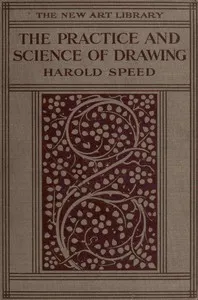
The Practice and Science of Drawing
by Harold Speed
- Language
- EN
- Format
- EPUB
- Size
- 7.2 MB
Description
This work is a technical manual on the principles and practices of drawing, intended for art students and practitioners. Written in the early 20th century, it emphasises that mastery of drawing relies on understanding fundamental concepts rather than shortcuts or superficial techniques. Harold Speed discusses common misconceptions about drawing, criticising approaches that seek rapid or formulaic solutions, and stresses the importance of intellectual engagement and personal expression in artistic development. The book draws upon Speed’s own experiences and observations, contrasting mechanical skill with true artistic insight as exemplified by historic masters. It aims to guide students towards developing a disciplined approach rooted in understanding rather than reliance on tricks, advocating for steady, thoughtful practice as the path to excellence.
The text combines technical advice with philosophical reflections on the nature of art, making it a practical yet reflective resource for those seeking to deepen their understanding of drawing as a craft and art form within the context of early 20th-century artistic education.
The text combines technical advice with philosophical reflections on the nature of art, making it a practical yet reflective resource for those seeking to deepen their understanding of drawing as a craft and art form within the context of early 20th-century artistic education.
From the opening pages
Permit me in the first place to anticipate the disappointment of any student who opens this book with the idea of finding "wrinkles" on how to draw faces, trees, clouds, or what not, short cuts to excellence in drawing, or any of the tricks so popular with the drawing masters of our grandmothers and still dearly loved by a large number of people. No good can come of such methods, for there are no short cuts to excellence. But help of a very practical kind it is the aim of the following pages to give; although it may be necessary to make a greater call upon the intelligence of the student than these Victorian methods attempted. It was not until some time after having passed through the course of training in two of our chief schools of art that the author got any idea of what drawing really meant. What was taught was the faithful copying of a series of objects, beginning with the simplest forms, such as cubes, cones, cylinders, &c. (an excellent system to begin with at present in danger of some neglect), after which more complicated objects in plaster of Paris were attempted, and finally copies of the human head and figure posed in suspended animation and supported by blocks, &c. In so far as this was accurately done, all this mechanical training of eye and hand was excellent; but it was not enough. And when with an eye trained to the closest mechanical accuracy the author visited the galleries of the Continent and studied the drawings of the old masters, it soon became apparent that either his or their ideas of drawing were all wrong. Very few drawings could be found sufficiently "like the model" to obtain the prize at either of the great schools he had attended. Luckily there was just enough modesty left for him to realise that possibly they were in some mysterious way right and his own training in some way lacking. And so he set to work to try and climb the long uphill road that separates mechanically accurate drawing from artistically accurate drawing. Now this journey should have been commenced much earlier, and perhaps it was due to his own stupidity that it was not; but it was with a vague idea of saving some students from such wrong-headedness, and possibly straightening out some of the path, that he accepted…
Ask about this book
An AI guide answers your questions about this title
FAQ
Is "The Practice and Science of Drawing" free to download?
Yes, it is free to download — no sign up needed.
What format is the file?
EPUB.
Similar books


Reader reviews Be the first
No reviews yet. Be the first to review this book.
Write a review
Protected by reCAPTCHA.