
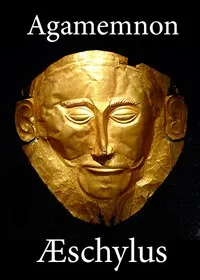
The Agamemnon of Aeschylus: Translated into English Rhyming Verse with Explanatory Notes
by Aeschylus
- Language
- EN
- Format
- EPUB
- Size
- 156 KB
Description
Set in the ancient Greek city of Mycenae during the 5th century BC, the play presents a tragic story rooted in classical mythology and early Greek drama. It recounts the aftermath of the Trojan War, focusing on the return of King Agamemnon and the subsequent events within his household. The narrative examines themes of justice, revenge, and the destructive effects of treachery as Clytemnestra, wife of Agamemnon, plots against her husband, motivated by past sacrifices and desires for power. As a Greek tragedy, the work employs formal poetic structures, including verse and choruses, characteristic of its period and genre.
This edition translates Aeschylus's original Greek into English rhyming verse, accompanied by explanatory notes to aid understanding. First performed in the early 5th century BC, the play remains an influential example of classical Greek theatre, highlighting the moral and political dilemmas inherent in familial loyalty and revenge. Its enduring significance lies in its portrayal of compelling characters and timeless ethical questions.
This edition translates Aeschylus's original Greek into English rhyming verse, accompanied by explanatory notes to aid understanding. First performed in the early 5th century BC, the play remains an influential example of classical Greek theatre, highlighting the moral and political dilemmas inherent in familial loyalty and revenge. Its enduring significance lies in its portrayal of compelling characters and timeless ethical questions.
From the opening pages
The sense of difficulty, and indeed of awe, with which a scholar approaches the task of translating the Agamemnon depends directly on its greatness as poetry. It is in part a matter of diction. The language of Aeschylus is an extraordinary thing, the syntax stiff and simple, the vocabulary obscure, unexpected, and steeped in splendour. Its peculiarities cannot be disregarded, or the translation will be false in character. Yet not Milton himself could produce in English the same great music, and a translator who should strive ambitiously to represent the complex effect of the original would clog his own powers of expression and strain his instrument to breaking. But, apart from the diction in this narrower sense, there is a quality of atmosphere surrounding the Agamemnon which seems almost to defy reproduction in another setting, because it depends in large measure on the position of the play in the historical development of Greek literature. If we accept the view that all Art to some extent, and Greek tragedy in a very special degree, moves in its course of development from Religion to Entertainment, from a Service to a Performance, the Agamemnon seems to stand at a critical point where the balance of the two elements is near perfection. The drama has come fully to life, but the religion has not yet faded to a formality. The Agamemnon is not, like Aeschylus’ Suppliant Women , a statue half-hewn out of the rock. It is a real play, showing clash of character and situation, suspense and movement, psychological depth and subtlety. Yet it still remains something more than a play. Its atmosphere is not quite of this world. In the long lyrics especially one feels that the guiding emotion is not the entertainer’s wish to thrill an audience, not even perhaps the pure artist’s wish to create beauty, but something deeper and more prophetic, a passionate contemplation and expression of truth; though of course the truth in question is something felt rather than stated, something that pervades life, an eternal and majestic rhythm like the movement of the stars. Thus, if Longinus is right in defining Sublimity as “the ring, or resonance, of greatness of soul,” one sees in part where the sublimity of the Agamemnon comes from. And it is worth noting that the faults which some critics have found in the play are in harmony with this conclusion. For
Ask about this book
An AI guide answers your questions about this title
FAQ
Is "The Agamemnon of Aeschylus: Translated into English Rhyming Verse with Explanatory Notes" free to download?
Yes, it is free to download — no sign up needed.
What format is the file?
EPUB.
More by Aeschylus



Similar books



Reader reviews Be the first
No reviews yet. Be the first to review this book.
Write a review
Protected by reCAPTCHA.